Incubation
We are supporting startups at early stages of their formation and developing, by using international experience of our mentors.
Hadoop user group meeting to be held in Azerbaijan
On March 10, 2019, the INNOLAND Incubation and Acceleration Center together with the Tech Academy will hold a meeting of the Hadoop user group in Azerbaijan.
Participation in the discussion of well-known foreign and local experts will focus on the application of Big Data Technologies, stages of Data Analytics and many other important issues.
Speakers of the event will be Abzetdin Adamov, Head of Data Analytics Center ADA University, Zekeriya Beşiroglu, Big Data Analyst at KOMTAŞ Information Management Center in Turkey, the Head of the Oracle Users Group and the winner of the “Oracle ACE Director” award.
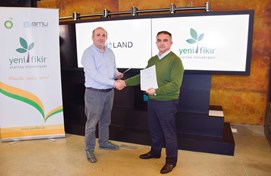
"INNOLAND" and "Yeni Fikir" have signed a memorandum of cooperation
On March 17, memorandum of understanding signed between "Innovations Center" LLC (INNOLAND), which is subordinate to the State Agency for Citizens Service and Social Innovations under the President of The Republic of Azerbaijan, and “Yeni Fikir” LLC. The purpose of the Memorandum is to support entrepreneurship ecosystems for technological startups in our country and in the regions of Azerbaijan and to implement a high-level partnership that serves the needs of emerging (or other) technology entrepreneurs.
The document, along with the formation and development of technology entrepreneurship, also reflects cooperation issues related to the strengthening of business initiatives. Thus, the content of the Memorandum reflects the factors that are being estimated for the establishment and development of innovation ecosystems in our country, as well as business initiatives.
"Innovations Center" LLC (INNOLAND) cooperates with local and international organizations in accordance with the strategy of the development of innovation ecosystem in our country and in the region, as well as for the development of technology entrepreneurship (startups). As one of such organizations, "Yeni Fikir" LLC is one of the companies operating in the intellectual sector in Azerbaijan and having a specific role in the formation of startup culture.
Thus, the "Yeni Fikir" startup competition, which was held for the sixth time this year, is being implemented by "Yeni Fikir" LLC, sponsored by BP, the Baku Engineering University. The company "Yeni Fikir" cooperates with "Innovations Center" LLC (INNOLAND) in organizing the same startup competition. Five startup projects that will win the competition.
The development of five startup projects that will win the competition will also be supported at the Innoland Incubation and Acceleration Center.
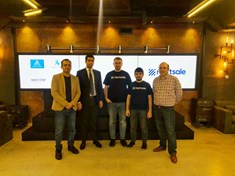
The seed round investment made into the Nextsale and Whelp startups
In "INNOLAND" Incubation and Acceleration Center the seed round investment made into the "Nextsale" and "Whelp" startups, participants of the winter acceleration program of the SUP "Startap Accelerator.
The investment in these startups was implemented jointly by the "Azfinans" Investment Company, the "Next Step" Innovation Center and Khazar Ventures.

An online platform in the financial field that provides additional features based on customer data analysis
https://onepoint.az
AI-based business messenger to connect with customers everywhere: live chat, phone, email, and social
https://getwhelp.com/
Botbox is a platform for small and medium-sized businesses to seamlessly assist customers and automate business processes through the most popular messaging apps.
https://www.botboxpro.com/